March 4, 2026 LCC TV NEWS
KAMPALA, Uganda — As joint U.S.-Israeli military operations against Iran intensify for a fifth day, the Ugandan government is executing a complex evacuation of its citizens from the conflict zone while simultaneously reinforcing its long-standing policy of refusing foreign military bases on its soil. The escalating crisis, which has already resulted in the death of Iran’s Supreme Leader and hundreds of casualties, is sending geopolitical shockwaves across the globe, with East Africa closely monitoring the situation.
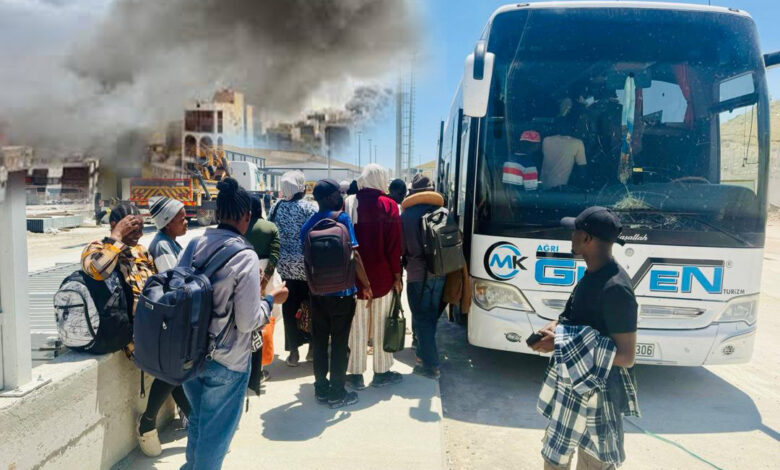
Amid heavy bombardment and a shutdown of Iranian airspace, the Ugandan government has successfully coordinated the evacuation of 43 of its citizens from Tehran. The first group of students, enrolled at Ahlul Bayt International University, is expected to land at Entebbe International Airport on Thursday, March 5, aboard Ethiopian Airlines .
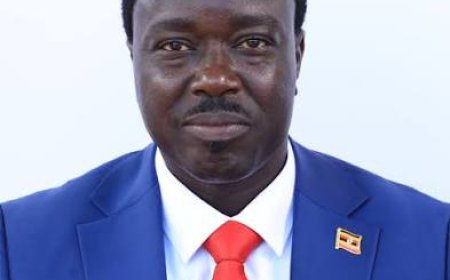
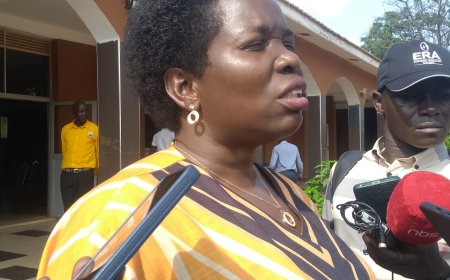
The operation required a perilous 24-hour overland bus journey from Tehran to the Turkish border, navigating military checkpoints before an 18-hour road trip to Istanbul . “Efforts are ongoing to repatriate the remaining 53 students currently studying at QOM University in Iran,” confirmed Balaam Barugahara, the Minister of State for Children and Youth Affairs .
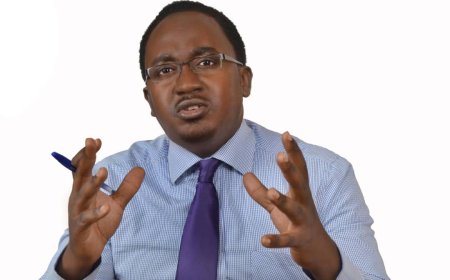
The urgency of the evacuation was underscored by Nyombi Thembo, Executive Director of the Uganda Communications Commission, who was transiting through Dubai when the conflict erupted. “War is news when it's thousands of kilometres away. But when a missile hits a hotel just a few kilometres from where you are staying, it becomes a live threat,” he posted on X, highlighting the very real danger faced by Ugandans in the region .
Regional Conflict Intensifies
The military conflict shows no signs of abating. On Wednesday, U.S. Defense Secretary Pete Hegseth declared that the American campaign was accelerating, with more warplanes arriving in the region and a promise of “death and destruction all day long” . In a significant naval escalation, Hegseth confirmed that a U.S. submarine-launched torpedo sank the Iranian frigate Iris Dena in the Indian Ocean off the coast of Sri Lanka, marking the first such submarine attack on an enemy ship since World War II .
Hegseth also claimed that U.S. and Israeli forces would have “complete control of Iran skies in under a week” and that Iran’s missile launches have dropped by 86% since the start of the strikes . Meanwhile, the death toll continues to rise, with Iran’s Red Crescent Society reporting at least 787 killed since Saturday, including 175 people in the bombing of a girls’ elementary school .
The conflict is drawing in a widening circle of nations. Turkey announced that NATO air defenses shot down an Iranian missile heading toward its airspace . Iran has continued its retaliatory strikes, targeting U.S. assets in Gulf states, including a drone attack on the Al Udeid Air Base in Qatar, the largest U.S. military installation in the Middle East .
Diplomatic Fallout and Conflicting Narratives
Diplomatic efforts appear to have collapsed amid mutual accusations. On one side, the Israeli Ambassador to Uganda, Gideon Behar, placed the blame squarely on Tehran, stating that Iran abused international peace efforts to advance its nuclear weapons programme, forcing Israel and the U.S. to conduct “preemptive strikes” following the death of Supreme Leader Ayatollah Ali Khamenei . “The people of Iran are happy that the regime will be replaced,” Behar added .
Conversely, Iranian Foreign Minister Seyed Abbas Araghchi accused U.S. President Donald Trump of betraying diplomacy. “When complex nuclear negotiations are treated like a real estate transaction... The outcome? Bombing the negotiation table out of spite. Mr. Trump betrayed diplomacy and Americans who elected him,” Araghchi posted on X, noting that the strikes came as a fourth round of indirect talks was scheduled . Iran’s UN envoy, Ali Bahreini, reinforced this, stating, “War was not our option. War was imposed on Iran” .
Uganda’s Position: Sovereignty and Self-Reliance
As global powers scramble to secure their interests, President Yoweri Museveni’s long-standing defense policy has gained renewed relevance. In remarks that have resurfaced amid the current tensions, Museveni explained why Uganda has consistently rejected proposals to host foreign military bases or sign Status of Forces Agreements (SOFA) with Western nations.
Speaking previously on the matter, Museveni recalled offers from the U.S. and Britain to help build Uganda’s army, which he rejected out of confidence in Uganda’s own capabilities. “We said, foreign armies, what we can defend ourselves. We don’t need anything from anybody,” he stated .
A major point of contention was the proposed SOFA, which would have allowed foreign soldiers to be tried in their own countries rather than in Uganda for crimes committed on Ugandan soil. Museveni rejected this after his request for reciprocity was denied. “What if he kills a Ugandan or rapes a Ugandan girl? There’s no way we can say that you take him away to be tried somewhere else. There’s no way,” Museveni asserted . This policy of non-alignment and self-reliance places Uganda in a distinct category as the risks faced by nations hosting foreign troops become increasingly apparent in the current conflict.
As the war rages on, Uganda’s focus remains on the safe return of its citizens. With commercial flights still suspended across large parts of the Middle East, the government continues to advise Ugandans in the region to remain cautious while diplomatic efforts secure passage for the dozens still stranded.
LCC TV NEWS