











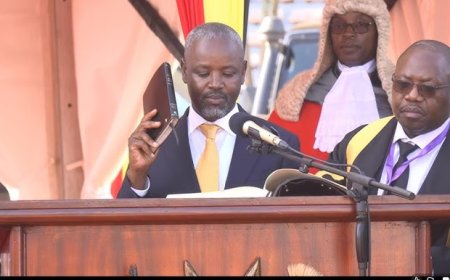


: Dr. Lakisa Mercy Faith Vows to Redefine Youth and Children’s Agenda, Pledges Concrete Action on Unemployment
Newly appointed Minister-designate for Youth and Children Affairs, Dr. Lakisa Mercy Faith, has declared her readiness to serve after a rigorous parliamentary vetting. Committing to socio-economic transformation, she pledged robust structural support for youth empowerment and promised to aggressively tackle the chronic challenge of youth unemployment across Uganda. In an exclusive parliamentary report, senior political correspondent details Dr. Lakisa Mercy Faith’s testimony before the Appointments Committee. The nominee outlines a radical shift from token skilling programs to demand-driven job creation, digital economy integration, and legal reforms for child protection. With Uganda’s median age at 16.7 years, Dr. Lakisa’s pledge to enforce budget accountability and private-sector absorption mechanisms marks a potential turning point for youth policy in Uganda.



LCC TV NEWS
KAMPALA – In a rigorous session before Parliament’s Appointments Committee on Tuesday, the newly appointed Minister-designate for Youth and Children Affairs, Dr. Lakisa Mercy Faith, declared her unequivocal readiness to steer Uganda’s most demographically significant yet economically vulnerable sector. Her appearance signaled a potential shift from rhetoric to structural intervention, as she laid out a mandate anchored in socio-economic transformation and the hard-nosed challenge of youth unemployment.
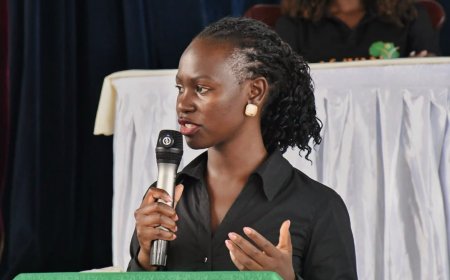
Dressed in muted professional attire, Dr. Lakisa faced the committee with a demeanor that fused academic poise with political acuity. When asked about her vision, she did not resort to platitudes. Instead, she anchored her testimony on a single, urgent premise: safeguarding the future of Ugandan children as the prerequisite for a stable workforce.
“Our children are not a distant tomorrow; they are the workforce of the next decade,” Dr. Lakisa told the committee. “If we fail to protect their foundational rights—education, nutrition, and safety—we are merely managing poverty, not eradicating it.”
The nominee, whose background includes developmental economics and child psychology, immediately pivoted to the elephant in the room: youth unemployment. Uganda has one of the youngest populations globally, with over 70% of its citizens under 30, yet the majority remain trapped in informal, precarious, or non-existent employment.
Dr. Lakisa committed to a “robust structural support” framework that moves beyond traditional skilling workshops and token revolving funds. While she praised existing programs like the Youth Livelihood Programme (YLP) and the Emyooga initiative, she acknowledged their fragmented implementation.
“Skilling without a market is a rehearsal for frustration,” she warned. “We will prioritize demand-driven vocational training, digital economy integration, and most critically, post-training absorption mechanisms. That means aggressive partnerships with the private sector, agro-industrial hubs, and the innovation ecosystem.”
Her pledge to tackle youth unemployment directly—rather than as a byproduct of general economic growth—struck a chord with committee members, several of whom represent constituencies with youth unemployment rates exceeding 40%. Dr. Lakisa proposed three immediate priorities: a national youth employment data dashboard to map vacancies and skills in real time, a credit guarantee scheme for youth-led startups without collateral, and a mandatory 30% youth inclusion quota in all government procurement for non-consultancy services.
On the children’s front, she promised to spearhead the long-stalled amendments to the Children (Amendment) Act, particularly focusing on street children rehabilitation, online safety, and accelerated justice for child abuse cases. She described the current rate of case backlog in family and children’s courts as “a national shame.”
“Every child sleeping on the streets of Kampala is a policy failure,” she stated flatly. “We will operationalize the National Child Helpline with real-time referral to shelters, social workers, and legal aid. No more passing the buck between ministries.”
Committee chairperson Hon. Milton Obote Kafunda pressed her on budgetary constraints—a perennial issue for a ministry often sidelined in resource allocation. Dr. Lakisa’s response was tactical: “I will not beg for scraps. We will cost every deliverable, identify donor co-financing windows, and enforce the 10% sectoral budget allocation to youth and children as stipulated in the National Development Plan. If funds are misappropriated, I will personally ensure the names are published.”
That declaration drew muted applause from the public gallery, though some analysts caution that her success will depend on navigating the political economy of patronage, where youth groups are often mobilized as political machinery rather than economic actors.
“Dr. Lakisa has the profile and the passion,” said John Bosco Mwenda, a Kampala-based governance analyst. “But youth unemployment is not a technical problem; it’s a political one. If she tries to bypass the local power brokers who control youth ‘leadership’ structures, she may find herself isolated. The question is whether she has the political capital to enforce structural change or whether she will be reduced to launching slogans.”
For her part, Dr. Lakisa remained undeterred. In a brief exchange after the vetting, she told this reporter: “I am not here to manage decline. I am here to design a legacy. The youth of Uganda are tired of being romanticized and ignored. They want systems, not speeches.”
The Appointments Committee is expected to submit its report to the full House by the end of the week. Barring any unforeseen revelations, Dr. Lakisa Mercy Faith is poised to become the first minister in five years to assume the portfolio with a clear, time-bound charter of action.
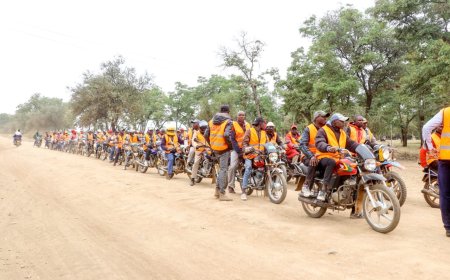
As Uganda’s median age hovers at 16.7 years, the stakes could not be higher. For millions of young Ugandans watching from taxi parks, boda stages, and rural trading centers, Dr. Lakisa’s vetting was more than a procedural formality—it was a litmus test of whether the state is finally ready to invest in its greatest renewable resource: its youth.
LCC TV NEWS
What's Your Reaction?