

















The Anai Airport Debate: A Reflection of a Deeper Regional Concern
As Karamoja celebrates the launch of Kidepo International Airport, Lango’s proposed Milton Obote International Airport remains stalled. This investigation reveals seven public grievances—from land rights to political neglect—shaping a region’s demand for fair development.


LCC TV NEWS
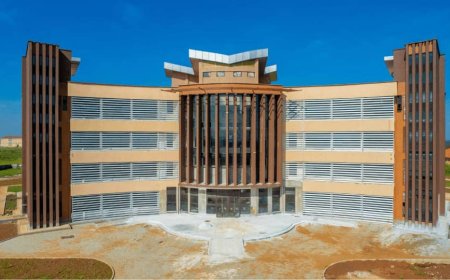
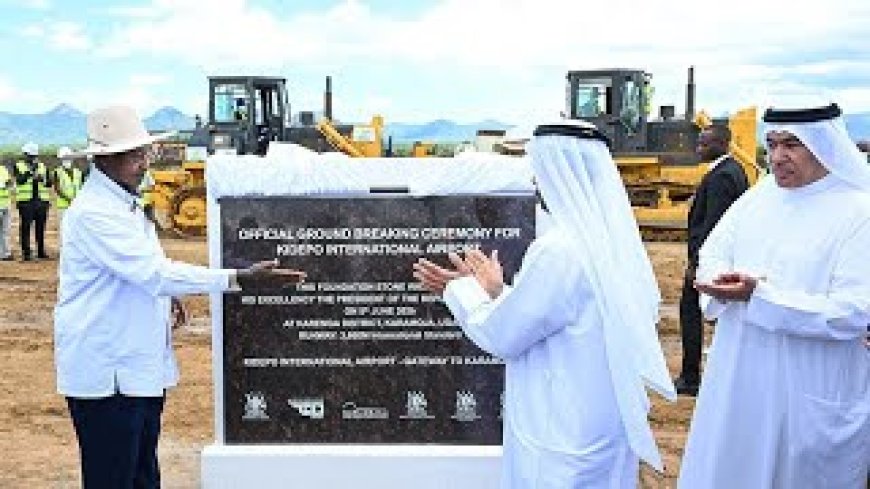
LIRA CITY, UGANDA – The recent commissioning of Kidepo International Airport in Karamoja by President Yoweri Museveni has been hailed as a milestone for the remote northeastern region. But in the sprawling agricultural heartlands of Lango, the celebration has struck a different chord—one of impatience, anxiety, and fractured trust.
As Karamoja opens its doors to regional trade and tourism, the proposed Milton Obote International Airport in Anai, on the outskirts of Lira City, remains mired in uncertainty. What was once envisioned as a transformative economic catalyst for the Lango sub-region has instead become a lightning rod for seven distinct public grievances—each exposing a deeper struggle over land rights, political representation, and the very meaning of equitable development.
A Region Divided Between Aspiration and Grievance
Contrary to early characterizations of blanket opposition, a careful review of public commentary reveals a more nuanced position: the people of Lango are not inherently against the airport. Rather, their resistance is rooted in a demand that development does not come at the expense of fundamental rights.
“The community supports development, but affected families deserve fair compensation before surrendering their land,” said one resident, whose name has been withheld to protect their privacy. “Development should not create new poverty.”
That sentiment—fairness before bulldozers—has emerged as the single most unifying theme across dozens of public comments, social media discussions, and community meetings reviewed by this journalist.
Seven Public Concerns Shaping the Impasse
1. Development Without Dispossession
The foremost concern centers on compensation, land rights, and the treatment of project-affected persons. Citizens point to other infrastructure projects across Uganda where affected populations received timely and transparent payment. “Lango should not be treated differently,” one commenter argued.
2. Fear of Losing Another Historic Opportunity
A palpable anxiety has taken hold: continued delays and internal discord could prompt the government to relocate the airport project to another region. “If leaders and communities fail to find common ground, future generations may blame today’s decisions for denying Lango a major economic opportunity,” warned another contributor.
3. A Growing Feeling of Government Neglect
The airport debate has become a proxy for a wider perception that Lango no longer receives strategic government attention commensurate with its needs. “Government commitments to Lango must move beyond promises and become visible realities through implementation,” one commenter said, echoing a chorus of frustration over stalled industrial and infrastructure projects elsewhere in the region.
4. Economic Contribution vs. National Investment
Lira City’s position as one of Uganda’s top revenue-generating urban centers and a growing industrial hub was cited repeatedly. “Lango contributes substantially to Uganda’s economy and deserves strategic investments that match its economic significance,” read a typical comment, reflecting a core demand for reciprocity.
5. Leadership Failures and Information Gaps
Many blamed the current crisis on weak leadership, poor communication, and inadequate stakeholder engagement. “The crisis is not merely about land but about communication, trust, and leadership,” one observer noted, pointing to a breakdown in dialogue between technocrats, political leaders, and affected families.
6. Frustration with Local Political Representation
A striking undercurrent is citizen dissatisfaction with their own elected leaders. Some feel that local representatives have failed to articulate community interests effectively or broker a balanced solution. “Leadership should bridge the gap between development objectives and community concerns,” a contributor argued.
7. The Image of NRM in Lango
The controversy is also shaping political perceptions. While some residents acknowledge government efforts to bring projects to the region, others view the compensation dispute as evidence that national priorities overlook local realities. “The handling of the airport issue may shape public trust in government development commitments,” one commenter warned, suggesting potential political repercussions for the ruling National Resistance Movement (NRM) in a region that has historically been a contested political landscape.
An Emerging Community Consensus
Despite the multiplicity of grievances, a clear consensus is forming. Across the seven areas of concern, five shared demands have crystallized:
-
Lango wants development—unequivocally.
-
Communities demand fairness, transparency, and respect for land rights.
-
Compensation must be resolved before, not after, displacement.
-
Government and local leaders must engage openly and continuously with affected families.
-
The region cannot afford to lose another strategic national investment.
Beyond the Tarmac: A Symbolic Crossroads
What began as a debate over an airstrip has evolved into something far larger. The Anai Airport controversy has become a referendum on governance, citizen participation, and the social contract between Kampala and the regions.
For the people of Lango, the question is no longer whether an airport will be built, but how—and at what human cost. For the government, the challenge is to demonstrate that Uganda’s infrastructure drive is not just about steel and runways, but about justice, dialogue, and lasting trust.
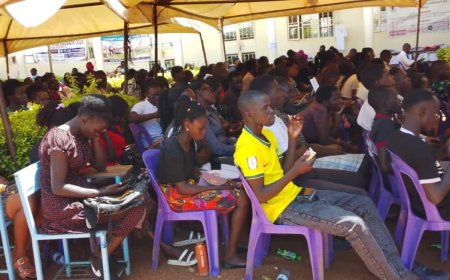
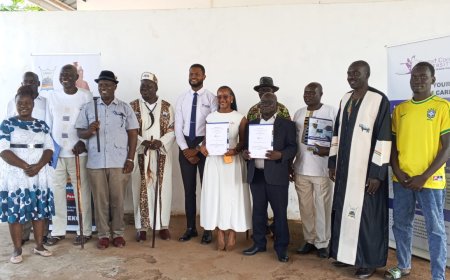
As one elder put it in a subdued community gathering on the outskirts of Lira City: “We are not standing in the way of progress. We are standing up for our place within it.”
The coming months will test whether that standing leads to a breakthrough—or a breakdown.
LCC TV NEWS
What's Your Reaction?